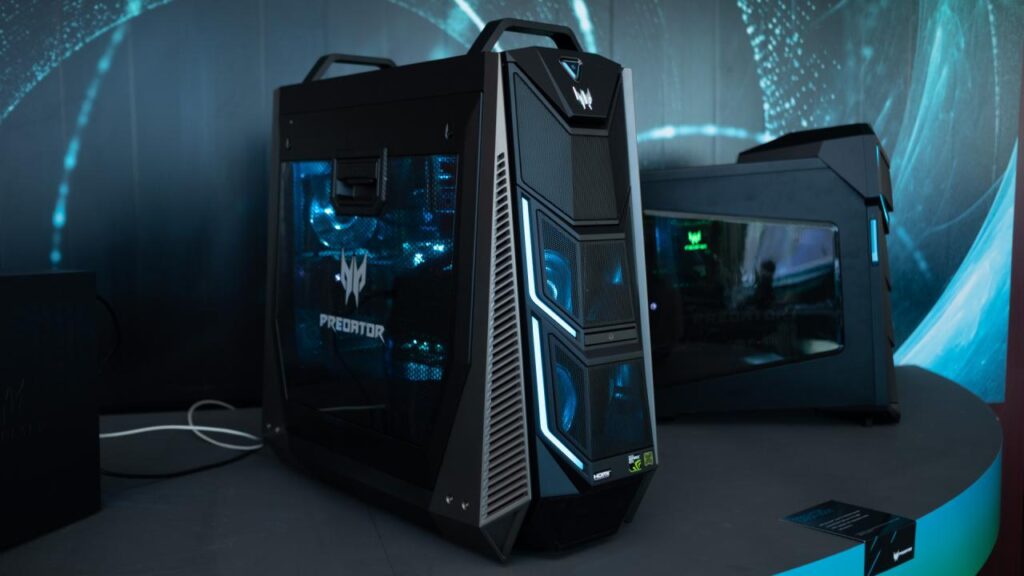
The breathtaking fidelity and immense scale of modern video games, which often feature sprawling open worlds, complex physics simulations, and realistic lighting, are a testament not only to the ingenuity of software engineers and artists but also to the sheer computational power of the hardware used to create them.
Developing a video game is fundamentally more demanding than simply playing one, as the creation process involves simultaneous tasks like compiling massive codebases, rendering high-resolution 3D models, baking complex lighting scenarios, and running real-time game engine previews, all requiring top-tier processing capabilities.
For an aspiring or professional game developer, the computer isn’t just a tool; it’s the foundation upon which their digital world is built, and skimping on its components will quickly result in agonizing load times, frequent crashes, and a dramatically hampered creative workflow.
From the choice of the Central Processing Unit (CPU), which acts as the brain for code compilation and simulation, to the powerful Graphics Processing Unit (GPU), which renders the visuals that ultimately define the game’s aesthetic, every piece of the development workstation must be meticulously chosen to handle the intense, multidisciplinary demands of modern game creation.
The proper hardware setup ensures that the creative flow remains uninterrupted, allowing developers to focus on innovation instead of waiting for their machine to catch up.
The Ultimate Workstation: Core Components
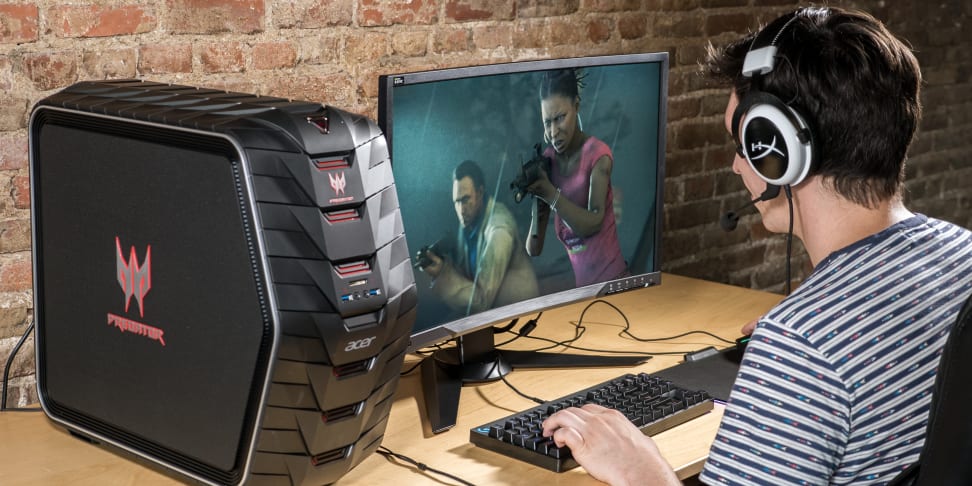
A high-performance game development workstation is a specialized machine, often surpassing the specs of a high-end gaming PC because it needs to create the content, not just run it.
A. Central Processing Unit (CPU)
The CPU is the absolute brain of the development machine, crucial for tasks that involve sequential, non-graphical computation.
Its primary responsibilities include compiling code (turning human-readable instructions into machine language) and shader compilation (pre-processing graphical instructions).
A high core count is vital for multitasking, allowing the developer to run the game engine, a code editor, a 3D modeling application, and a browser simultaneously without slowing down.
Look for the latest generation of processors from Intel (Core i7 or i9) or AMD (Ryzen 7 or 9) with at least 8 cores for efficient parallel processing.
B. Graphics Processing Unit (GPU)
The GPU is essential for real-time visualization within the game engine and for graphically intensive artistic work.
A powerful GPU significantly reduces the time needed for light baking (calculating complex static lighting) and speeds up real-time rendering in the engine viewport.
For high-fidelity 3D development, particularly with engines like Unreal Engine, developers need a card with a large amount of Video RAM (VRAM), typically 12GB or more.
NVIDIA’s RTX series and AMD’s Radeon RX series are the go-to choices, supporting advanced features like Ray Tracing for accurate lighting simulation.
C. Random Access Memory (RAM)
RAM is the system’s short-term memory, enabling the computer to access data quickly for currently running applications.
Game development requires massive amounts of RAM because project files and running software (especially game engines and 3D modeling suites) are enormous.
While 16GB is the absolute minimum, 32GB of high-speed RAM is strongly recommended for serious development.
64GB or even 128GB is often necessary for developers who specialize in asset creation, high-poly 3D sculpting, or building massive open-world levels.
D. Storage: Speed is Everything
Storage speed is a critical factor in the daily efficiency of a developer, as they constantly load and save huge project files.
A Solid State Drive (SSD) is mandatory, specifically using the NVMe protocol, which is vastly faster than older SATA SSDs.
Developers should ideally have two separate NVMe SSDs: a smaller, super-fast drive for the operating system and core software, and a larger one (2TB or more) dedicated solely to storing large game project files and asset libraries.
This configuration dramatically reduces load times for the engine and for testing game builds.
Specialized Hardware for Specific Roles
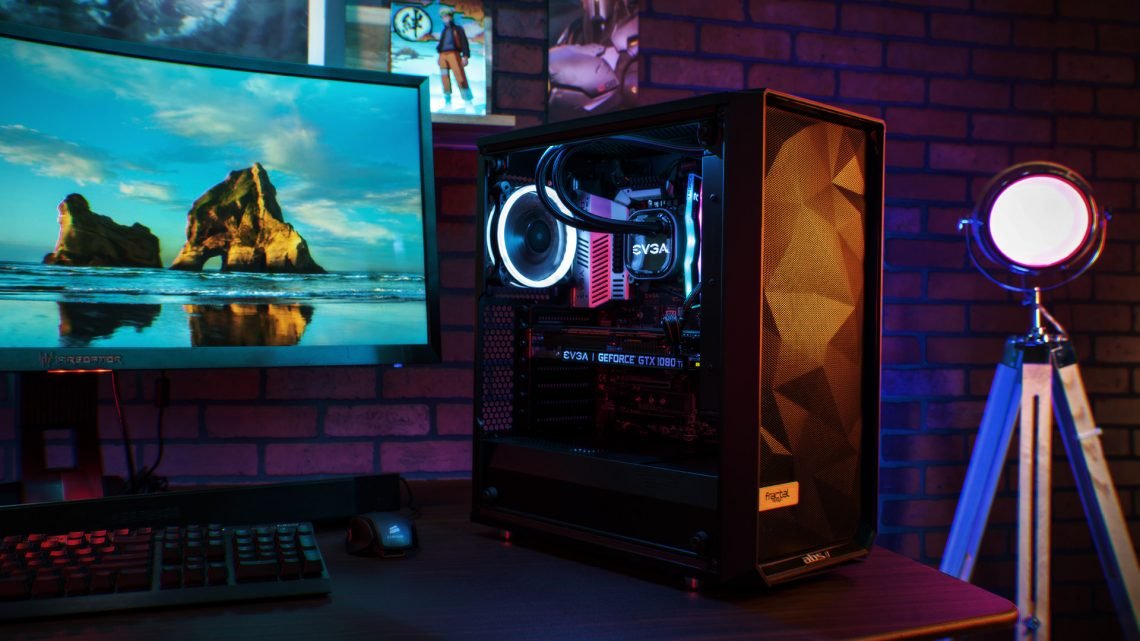
Not every developer needs the exact same setup; specialized roles demand particular hardware components for optimal performance.
A. For 3D Artists and Animators
A graphics tablet (like a Wacom or similar device) is non-negotiable for digital painting, texture creation, and 3D sculpting.
Artists require a high-resolution monitor with excellent color accuracy (often calibrated for 100% sRGB or DCI-P3) to ensure the game’s colors look correct on release.
The GPU’s VRAM is extremely important here for loading and manipulating high-resolution texture maps and complex models simultaneously.
B. For Programmers and Technical Artists
Programmers prioritize CPU core speed and RAM capacity for fast code compilation and running multiple debugging instances.
They benefit from a multi-monitor setup (two or three displays) to simultaneously view code, the game engine viewport, and documentation.
A high-quality, comfortable mechanical keyboard is a professional tool for programmers who spend countless hours typing code.
C. For Audio Designers
Audio work is less graphically intensive but demands high-quality input and output devices.
External audio interfaces and professional-grade headphones/studio monitors are crucial for accurate mixing and sound design.
Their primary CPU load comes from running Digital Audio Workstations (DAWs) and complex audio middleware, making CPU speed and RAM important.
D. For Virtual Reality (VR) Developers
VR development requires the most powerful GPU currently available because the computer must render two high-resolution images (one for each eye) at a very high frame rate (90 FPS or more) to prevent motion sickness.
A dedicated VR headset (such as a Meta Quest or HTC Vive) is required for testing and debugging the game in real-time within the target environment.
Console Development: The Console Dev Kit
Developing games for platforms like PlayStation, Xbox, or Nintendo Switch requires access to highly specialized, restricted hardware known as the Development Kit (Dev Kit).
A. What a Dev Kit Is
A Dev Kit is a modified version of the console hardware that includes additional memory, debug ports, and specialized software tools.
These kits are loaned out to approved developers by the console manufacturer under strict Non-Disclosure Agreements (NDAs).
They allow developers to run uncompiled or debug versions of their games and access diagnostic tools to track performance, memory use, and resource bottlenecks.
B. Accessing the Console Ecosystem
Getting a dev kit is the official gateway to publishing on a console platform.
Developers must register and be approved through specific independent developer programs (like Microsoft’s ID@Xbox or Sony’s PlayStation Developer Program).
The kits integrate with a Software Development Kit (SDK), which is a collection of proprietary software libraries, tools, and documentation tailored to the specific console’s hardware.
C. Why It’s Different from a Retail Console
Dev Kits often have more powerful or configurable hardware than the final retail console.
This extra capacity allows developers to test games before they are fully optimized, providing a performance ceiling to aim for.
They contain debugging firmware that retail consoles lack, enabling sophisticated testing and error logging.
These are IP-locked and cannot be resold or used to play commercial games while in development mode.
Infrastructure: Networking and External Devices
Beyond the individual workstation, the supporting hardware infrastructure is critical, especially for large teams and multiplayer games.
A. High-Speed Networking
For studios working on large projects, files must be constantly synced to the central source control repository.
A high-speed network interface card (NIC), often 10 Gigabit Ethernet (10GbE), and high-performance routers/switches are necessary to avoid long waits when checking files in and out.
This is particularly important for console development, where deploying a new build to the Dev Kit over the network can take significant time.
B. Peripherals for Ergonomics
The long, intense hours of game development make ergonomics a major consideration for physical comfort and health.
A high-quality ergonomic chair, adjustable standing desk, and wrist rests are essential investments for long-term productivity.
Blue-light filtering monitors and proper lighting help reduce eye strain during extended work sessions.
C. Motion Capture (Mocap) Hardware
For games featuring realistic character movement, specialized Motion Capture (Mocap) hardware is often employed.
This includes dedicated Mocap suits with sensors, high-speed cameras, and specialized lighting equipment to accurately record human movement.
The data captured by this hardware is then processed by animation software and imported directly into the game engine.
D. Server Infrastructure
For online multiplayer games, a studio requires a robust, scalable server infrastructure for testing and deployment.
This involves dedicated servers or reliance on cloud computing services (like AWS or Azure) to simulate real-world player loads and network conditions.
The networking code in the game engine must be rigorously tested on this dedicated hardware to ensure a stable launch.
Conclusion
The hardware supporting modern video game creation is a sophisticated, non-negotiable foundation for success.
The development workstation must possess significantly more power than a regular gaming PC to handle the intense, complex workloads.
The CPU is the critical component for code compilation and project management, demanding high core counts and fast clock speeds.
A powerful GPU with ample VRAM is essential for rendering high-fidelity graphics and speeding up graphical tasks like light baking.
RAM capacity, ideally 32GB or more, is necessary for efficient multitasking across the demanding suite of development software.
Fast NVMe SSD storage is vital for reducing load times and maintaining an uninterrupted creative workflow.
Specialized hardware like Dev Kits, Mocap equipment, and high-quality monitors serve the unique needs of artists, programmers, and console developers.
Investing in the right hardware and ergonomic peripherals directly translates into faster production cycles and higher quality final products.