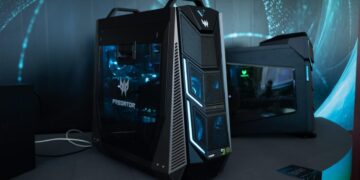
The video game industry stands on the precipice of a monumental shift, propelled by the relentless march of technology. For decades, the experience of gaming was tethered to local hardware be it a dedicated console, a powerful personal computer, or a handheld device. However, the rise of cloud gaming, or “gaming as a service” (GaaS), is dissolving these physical constraints, promising a future where high-fidelity gaming is accessible anywhere, on almost any screen. This transformative technology, leveraging the power of remote servers and high-speed internet, is poised to democratize access to interactive entertainment, fundamentally altering the economics, design, and culture of gaming. This extensive exploration details the mechanics, economic implications, technological challenges, and profound impact of cloud gaming on the entire ecosystem.
The Technology Driving the Revolution
At its core, cloud gaming operates on a simple, yet revolutionary premise: the game itself is executed on a powerful, remote server farm, not on the user’s local device. The local device, whether a smartphone, a smart TV, or a low-spec laptop, acts merely as a thin client for input and display. Understanding the technical pipeline is crucial to appreciating the magnitude of this change.
The Cloud Gaming Pipeline Explained
The journey of a button press from the user’s controller to the rendered image on their screen is a rapid, multi-stage process that must be executed in milliseconds.
-
A. Input Transmission: The moment a player presses a button or moves a joystick, the input command is compressed and transmitted instantly over the internet to the remote server. Latency at this stage is critical.
-
B. Server Processing and Rendering: The remote server, typically equipped with high-end GPUs and CPUs, receives the command, processes the game state, and renders the next frame of the game in high definition (e.g., 1080p or 4K) at a high frame rate (e.g., 60 FPS).
-
C. Video Encoding and Streaming: The rendered video frames are then compressed using advanced video codecs (such as H.264 or AV1) into a high-quality video stream. This must be done with minimal delay to avoid adding latency.
-
D. Client Reception and Decoding: The compressed video stream travels back across the internet to the user’s device, where the local client software rapidly decodes the video and displays it on the screen.
The entire process, from input to display, must be imperceptibly fastideally below 50 to 60 milliseconds of total end-to-end latency to mimic the responsiveness of a local gaming setup. This reliance on low-latency networking is the single greatest technological hurdle and the main reason cloud gaming has only recently become viable.
Overcoming the Latency Barrier
Latency is the mortal enemy of cloud gaming. While traditional video streaming (like Netflix) can buffer seconds of content to mask network fluctuations, interactive gaming demands immediate response. Modern cloud platforms employ several strategies to mitigate latency:
-
A. Edge Computing and CDN Optimization: Servers are deployed in numerous edge locations geographically close to user populations. The shorter physical distance reduces the time data takes to travel (speed of light latency). Content Delivery Networks (CDNs) are optimized to prioritize gaming packets.
-
B. Predictive Algorithms: Advanced algorithms on the client side attempt to predict the player’s next input and render a “pre-emptive” frame. While risky, this technique can dramatically reduce perceived lag when successful, masking brief network hiccups.
-
C. Optimized Codecs: Utilizing codecs like AV1, which are highly efficient at compressing high-motion video streams with low latency, minimizing the time spent on encoding and decoding.
The Economic and Market Disruption
Cloud gaming is not just a technological advancement; it is a disruptive force that restructures the entire economic model of the video game industry, challenging the dominance of traditional hardware cycles.
The Demise of the Console Cycle?
For decades, the industry was predicated on the console hardware cycle, where manufacturers would launch expensive, proprietary hardware every $5$ to $8$ years. This created high financial barriers for consumers and high development costs for studios adapting games to specific chip architectures.
-
A. Lower Barrier to Entry for Consumers: Cloud gaming effectively eliminates the need for a $500+$ dedicated console or a high-end gaming PC. Users need only a subscription and a basic, internet-connected device, democratizing access to AAA titles.
-
B. Shift from Product to Service: The revenue model shifts from high-margin, upfront hardware sales and individual game purchases to recurring subscription revenue (e.g., monthly access fees). This creates a more stable, predictable income stream for platform holders.
-
C. Extended Hardware Relevance: Legacy devices like older smart TVs or tablets, which lack the power for modern local rendering, are instantly transformed into capable gaming machines, extending their useful life.
New Market Opportunities and Audiences
By lowering the barrier to entry, cloud gaming unlocks massive untapped markets and audiences globally, particularly in regions where high-speed internet is available but purchasing dedicated gaming hardware is cost-prohibitive.
-
A. Mobile and Casual Gamers: Millions of users who primarily play mobile games are given instant access to complex console and PC titles without needing a console. This significantly expands the addressable market for established game franchises.
-
B. Non-Traditional Gaming Platforms: Smart TVs become primary gaming platforms. The necessity for a physical box vanishes, simplifying the setup and appealing to users who prefer a streamlined media experience.
-
C. Emerging Markets: In countries with rapid internet adoption but lower consumer discretionary spending on luxury hardware, cloud gaming offers a path to premium entertainment at a manageable monthly cost.
Impact on Game Development and Design
The shift to a server-side execution model offers developers unprecedented freedom and new avenues for game design that were previously impossible due to the constraints of local hardware.
Unleashing Development Potential
Since the game is running on a massive data center’s server, developers no longer need to worry about the lowest common denominator of a consumer’s machine.
-
A. Elimination of Optimization Hell: Developers can target a consistent, extremely powerful hardware profile in the cloud, eliminating the months of tedious optimization required to ensure a game runs smoothly on dozens of console configurations and hundreds of PC setups.
-
B. Higher Fidelity and Density: Games can feature vastly improved graphical fidelity, more complex physics simulations, and denser environments than ever before, as the cloud server can utilize far more processing power than a local console.
-
C. Faster Iteration and Updates: Patches and updates are applied directly to the server, instantly reaching all players without requiring multi-gigabyte downloads on the client side. This speeds up the development feedback loop and allows for constant service iteration.
Innovative Game Design Possibilities
The cloud architecture enables fundamentally new types of gameplay that rely on the collective power of the data center, a concept often termed Cloud-Native Gaming.
-
A. Massive Server-Side Physics: Games can run complex, realistic physics calculations that affect every player in a persistent world, such as real-time environmental destruction or fluid dynamics, which are too demanding for a single console.
-
B. Complex AI and World Simulation: Utilizing deep learning models and vast computational resources, games can feature incredibly sophisticated Non-Player Characters (NPCs) and dynamic world simulations that react realistically to player actions.
-
C. Ultra-Low Latency Multiplayer: The ability to co-locate all players in a multiplayer session on the same server rack drastically reduces network lag between players, enabling highly synchronized, massive-scale multiplayer experiences that were previously unachievable.

The Challenges and Roadblocks Ahead
Despite its immense potential, the realization of a truly ubiquitous cloud gaming future faces substantial technological and logistical hurdles that must be overcome.
The Persistent Network Challenge
The user experience remains highly dependent on external factors beyond the platform provider’s control, primarily the user’s internet connection.
-
A. Bandwidth Requirements: Streaming 4K gaming at $60$ FPS requires sustained, high-speed internet (often $35$ Mbps or higher). Many rural and even some urban areas globally still lack the necessary infrastructure.
-
B. Data Caps and Metered Connections: Heavy cloud gaming usage can quickly consume monthly data allotments imposed by Internet Service Providers (ISPs), making the service economically unviable for some users.
-
C. Wireless Stability: While wired (Ethernet) connections offer the best performance, many users rely on Wi-Fi. Fluctuations and interference in a home Wi-Fi network can introduce stuttering and increase latency dramatically.
Content Licensing and Platform Fragmentation
The transition to cloud distribution creates complex licensing issues and risks fragmenting the market, mirroring the challenges seen in the video streaming industry.
-
A. Ecosystem Silos: Major platform holders (e.g., Microsoft, Sony, Amazon, Google) are each building their own cloud infrastructure and subscription services. This forces consumers to choose a single ecosystem or subscribe to multiple services to access a broad library of games.
-
B. Developer Negotiations: Studios and publishers must negotiate entirely new licensing agreements for their titles to be available on cloud platforms, including terms related to streaming rights, server costs, and revenue sharing.
-
C. Ownership Perception: The shift from purchasing a permanent game license (physical or digital download) to merely renting access via a subscription changes the consumer perception of “ownership,” which can be a psychological barrier for some gamers.

A New Era of Interactive Entertainment
Cloud gaming is not merely an incremental improvement; it is a technological inflection point that will reshape the landscape of interactive entertainment. By decoupling high-fidelity gaming from expensive, dedicated hardware, it makes gaming instantly accessible, ubiquitous, and economically viable for a vastly larger audience. While challenges related to latency, infrastructure, and market fragmentation persist, the trajectory is clear. The economic model will favor services over products, game design will be freed from local hardware constraints, and the demographic profile of the “gamer” will continue to broaden. Ultimately, cloud gaming promises a world where the only limitation is the quality of the game itself, not the power of the device in the user’s hand, marking a pivotal moment in the history of play.