The landscape of interactive entertainment is undergoing a seismic shift as the traditional reliance on local hardware begins to dissolve into the ether of high-performance remote servers. Cloud gaming, once a fledgling concept plagued by latency issues and bandwidth constraints, has matured into a sophisticated ecosystem that promises to democratize high-end gaming experiences for everyone. At the heart of this revolution lies a complex web of global infrastructure, ranging from massive data centers to local edge computing nodes designed to minimize the physical distance between the server and the player.
As we look toward the horizon of this industry, the focus has shifted from simple game streaming to the creation of native cloud architectures that can handle thousands of concurrent players in a single persistent world. This evolution is not just about moving a console into the cloud; it is about reimagining what a game can be when it is no longer restricted by the thermal or processing limits of a plastic box under a television.
Understanding the intricacies of this infrastructure is essential for anyone following the trajectory of digital entertainment and the telecommunications industry. This deep dive will explore the critical technological pillars that are making low-latency, high-fidelity gaming a reality for a global audience. We will examine the roles of 5G connectivity, artificial intelligence in frame generation, and the decentralized server models that are currently being deployed to solve the most stubborn hurdles in the industry.
The Foundation of Modern Data Centers
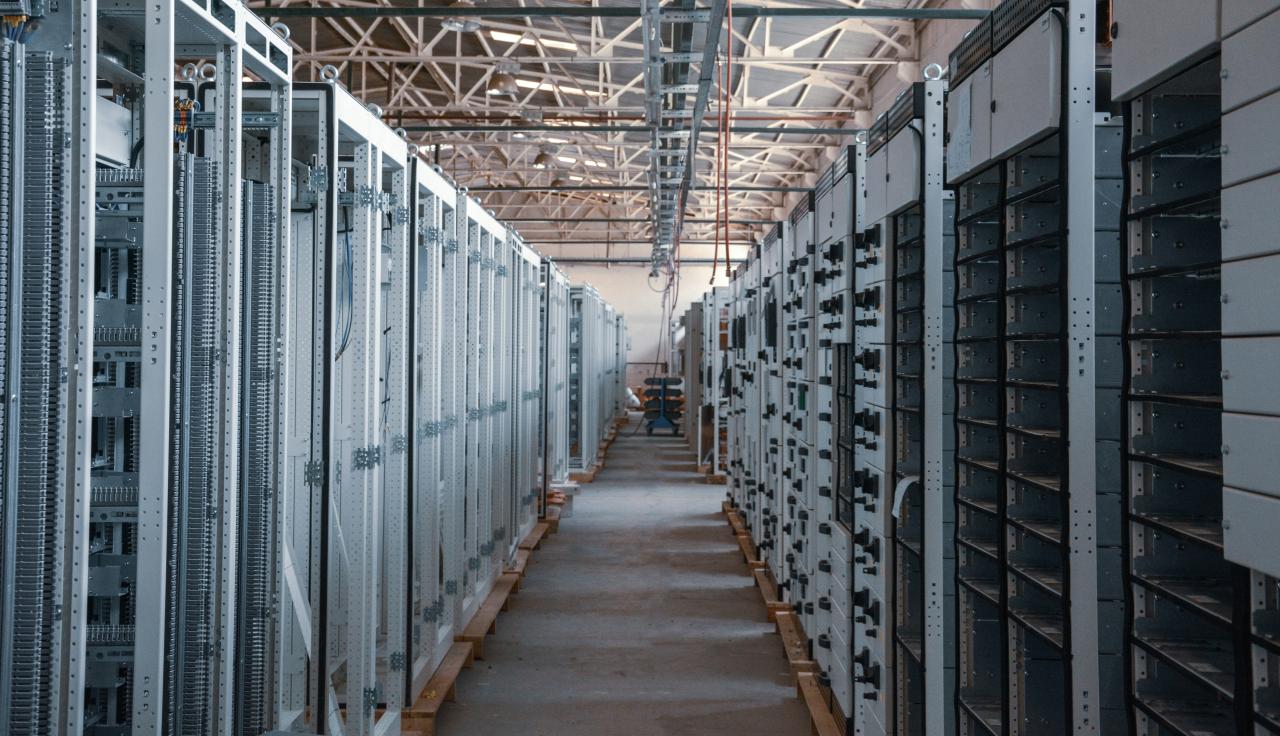
The backbone of any cloud gaming service is the physical infrastructure that houses the powerful GPUs and CPUs required to render modern titles. These facilities are specifically engineered to handle the massive heat output and power consumption associated with high-resolution gaming at sixty frames per second.
A. Custom GPU Blade Architecture
Standard enterprise servers are often optimized for data processing, but cloud gaming requires specialized graphics hardware. Modern infrastructure providers are now deploying custom rack designs that pack multiple high-performance GPUs into a single blade to maximize density.
B. Dynamic Resource Allocation
Unlike a home console that sits idle when not in use, cloud infrastructure uses virtualization to split a single powerful server into multiple gaming instances. This allows a provider to serve different tiers of users, from those playing casual indie games to those demanding 4K Ray-Tracing experiences, all from the same hardware stack.
C. Heat Management and Sustainability
Large-scale rendering generates immense thermal energy, leading providers to innovate in liquid cooling and heat reclamation systems. Many of the newest data centers are now built near renewable energy sources to ensure that the massive power draw remains environmentally responsible.
Solving the Latency Puzzle through Edge Computing
In gaming, every millisecond counts, and the time it takes for a signal to travel from a controller to a distant server and back is the primary enemy of the experience. Edge computing is the industry’s answer to the laws of physics, moving the “brain” of the game closer to the user.
A. Localized Micro-Data Centers
Instead of relying on a few massive hubs in major cities, providers are scattering smaller server clusters across residential neighborhoods. These micro-centers sit at the “edge” of the network, often within the same facilities as internet service providers, to cut down on the number of hops a data packet must take.
B. Point of Presence (PoP) Integration
By integrating hardware directly into the exchange points where different networks meet, cloud gaming services can bypass much of the public internet congestion. This creates a “fast lane” for gaming data, ensuring that a button press in a fast-paced shooter feels instantaneous to the player.
C. Regional Traffic Routing
Advanced software now predicts where the most player demand will come from based on time of day and local events. The infrastructure can pre-load popular game assets into specific regional servers to reduce initial load times and improve overall stream stability.
The Role of 5G and Next-Generation Connectivity
Even the best server in the world cannot overcome a poor home internet connection, which is why the rollout of advanced wireless technology is so crucial. The high throughput and low latency of modern mobile networks are the final pieces of the puzzle for truly portable high-end gaming.
A. Network Slicing for Gaming
Modern 5G infrastructure allows operators to “slice” their bandwidth, dedicating a specific lane exclusively for gaming traffic. This ensures that even in a crowded area, a gamer’s stream won’t be interrupted by someone else downloading a large file or streaming video nearby.
B. Ultra-Reliable Low-Latency Communication (URLLC)
URLLC is a specific technical standard within wireless networks that prioritizes the speed of small data packets, such as controller inputs. This technology is vital for competitive gaming where even a tiny delay can mean the difference between winning and losing a match.
C. Beamforming and Signal Stability
Advanced antenna technology now allows wireless towers to focus a signal directly toward a user’s device rather than broadcasting in all directions. This increases signal strength and reduces the interference that often causes “stuttering” in older wireless cloud gaming setups.
AI-Driven Stream Optimization
Artificial intelligence has become a silent partner in the cloud gaming experience, working behind the scenes to fix imperfections in the video feed. These algorithmic solutions can make a lower-bandwidth connection look and feel like a high-speed fiber link.
A. Neural Frame Interpolation
When a network hiccup causes a dropped frame, AI can analyze the previous and following frames to “guess” what the missing image should look like. The server then injects this artificial frame into the stream, preventing the jarring visual skips that used to plague early cloud services.
B. Predictive Input Processing
Some of the most advanced systems use machine learning to predict a player’s likely next move based on their past behavior. By pre-rendering the most probable outcomes, the server can effectively “hide” the latency of the signal transmission, creating a feeling of zero-lag response.
C. Adaptive Bitrate Streaming
AI monitors the health of a user’s connection in real-time, adjusting the resolution and compression of the video on the fly. Instead of the game freezing when the connection dips, the AI subtly lowers the visual quality for a few seconds to keep the action moving smoothly.
The Shift to Cloud-Native Game Design
The true potential of this infrastructure is realized when developers stop porting old games and start building new ones specifically for the cloud. These “cloud-native” titles can achieve scales that are physically impossible on a home console or a personal computer.
A. Infinite Physics and Destruction
Because the physics calculations happen on a massive server cluster rather than a local chip, games can feature fully destructible environments. Thousands of objects can interact simultaneously with realistic weight and momentum, creating a level of immersion that local hardware can’t handle.
B. Massive Persistent Universes
Cloud infrastructure allows for worlds that never “reset” and can support tens of thousands of players in the same instance. Every action a player takes can permanently change the world, with the server keeping track of every detail across a global network.
C. Seamless World Streaming
In a cloud-native environment, there are no loading screens because the infrastructure can stream assets from the data center’s storage directly into the GPU memory. This allows for incredibly fast travel across massive, detailed maps without any interruption to the gameplay flow.
Security and Data Integrity in the Cloud
As gaming moves to the server, protecting player data and preventing cheating has become a major focus for infrastructure engineers. Moving the game logic away from the client device inherently solves many of the problems that have plagued PC gaming for decades.
A. Zero-Trust Server Environments
Since the game code is never sent to the player’s device, it is much harder for hackers to decompile and create cheats like “wall-hacks” or “aim-bots.” The server remains a locked environment, ensuring that everyone in a competitive match is playing on a level and fair playing field.
B. DDoS Protection and Mitigation
Large-scale cloud providers have massive bandwidth capacity that can absorb the “distributed denial of service” attacks that often take down smaller game servers. This infrastructure-level protection ensures that the service remains available even during high-intensity attack scenarios.
C. End-to-End Encryption for Inputs
To prevent “man-in-the-middle” attacks where a hacker might intercept a player’s commands, modern streams are protected by high-speed encryption. This ensures that the sensitive data traveling between the controller and the server remains private and secure.
The Economic Impact of Cloud Scaling
The evolution of this infrastructure is also changing the business models of the gaming industry, shifting from high-cost hardware sales to more accessible service-based models. This allows developers to reach billions of people who own a smartphone but could never afford a high-end gaming PC.
A. Lowering the Barrier to Entry
By removing the need for a five-hundred-dollar console, cloud infrastructure opens the door for players in emerging markets. This massive expansion of the player base allows developers to take more creative risks with their games, knowing they have a larger potential audience.
B. Subscription-Based Infrastructure Access
Consumers are increasingly moving toward “all-you-can-play” models that bundle the hardware power and the software library into a single monthly fee. This provides a steady, predictable revenue stream for infrastructure providers, allowing them to constantly upgrade their server hardware.
C. Reduced Electronic Waste
As more people shift to cloud gaming, the demand for short-lived consumer electronics decreases. Centralizing the hardware in a professional data center allows for better recycling and longer component lifespans, contributing to a more sustainable tech ecosystem.
Conclusion

The evolution of cloud gaming infrastructure is fundamentally redrawing the boundaries of digital entertainment. Physical data centers are becoming more specialized to meet the unique demands of real-time interactive rendering. Edge computing has successfully tackled the latency issues that once made cloud streaming a frustrating experience. The integration of advanced wireless networks ensures that high-fidelity gaming is no longer tethered to a home router.
Artificial intelligence is playing a critical role in smoothing over the imperfections of long-distance data transmission. Cloud-native game design is beginning to offer experiences that go far beyond the capabilities of traditional consoles. Centralizing game logic on secure servers has created a more fair and cheat-free environment for competitive players. The shift toward service-based models is democratizing access to high-end gaming for billions of smartphone users.
Sustainability efforts in data center cooling are helping to reduce the environmental footprint of the gaming industry. The infrastructure is now robust enough to support massive, persistent worlds that live and breathe on remote servers. Security protocols have evolved to protect player inputs and personal data with enterprise-grade encryption. We are entering an era where the screen you use matters far less than the powerful network standing behind it.